
Yes, dogs can eat granola in small amounts if it is plain and free from harmful ingredients. Oats themselves are generally safe for dogs and can provide fibre and some nutrients. However many granola products contain added sugar, honey, chocolate, raisins, macadamias, or xylitol sweeteners which can be dangerous (or even toxic) for dogs so ingredients must always be checked.
Last updated:
March 19, 2026
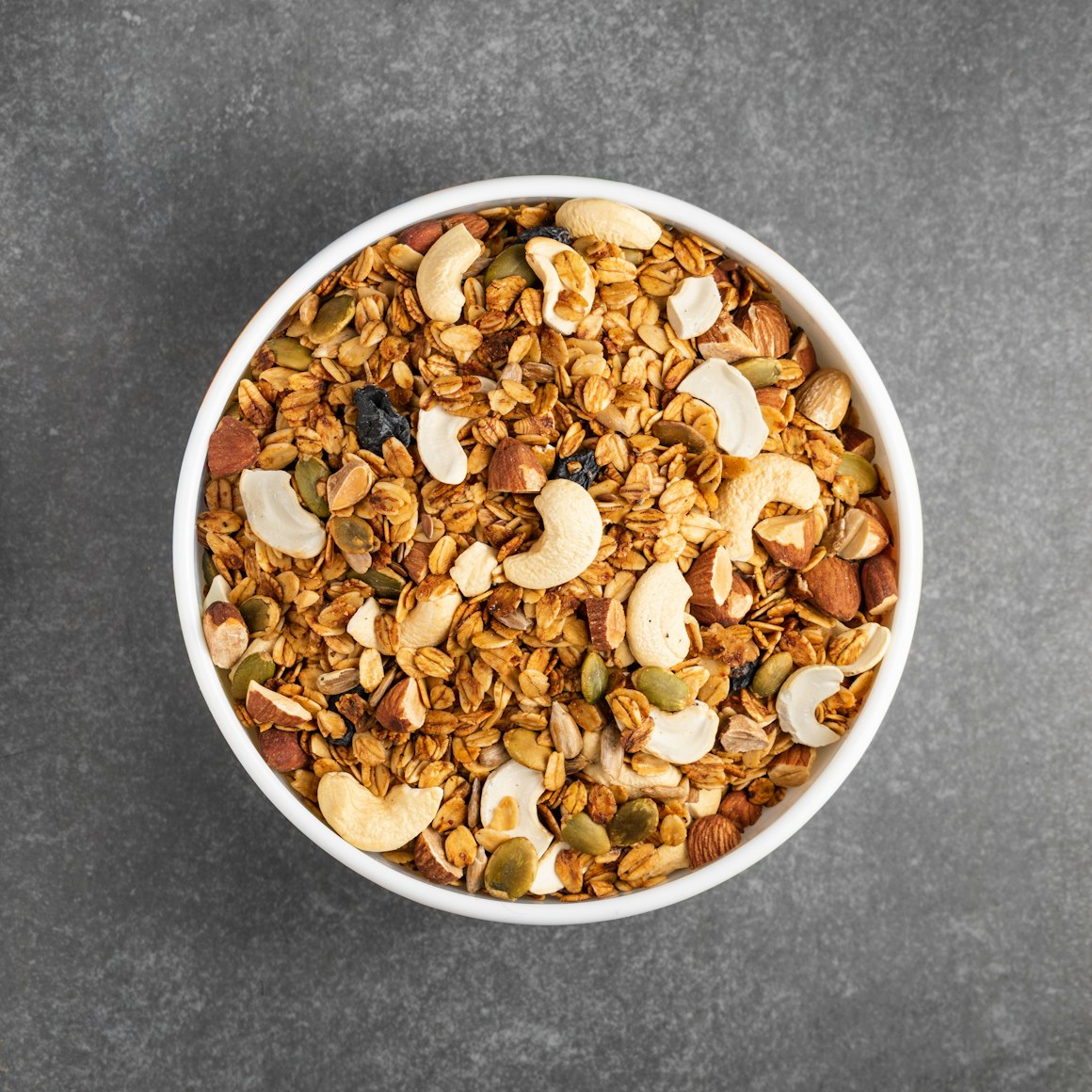
Many granola mixes contain ingredients that are unsafe for dogs including raisins, chocolate, macadamia nuts, and artificial sweeteners such as xylitol. Always read the ingredient list before feeding any granola to your dog. Even safe versions can be high in sugar and fat so they should never replace balanced dog food. Stick to plain oat based varieties and only offer a small amount as a rare treat rather than a regular snack.
Important: We do our best to ensure the information on this page is accurate and based on reputable animal health sources. However, this website is intended for general informational purposes only and the content has not been individually reviewed or approved by a veterinarian.
Every dog is different and reactions to foods can vary. If you have concerns about your dog’s diet or health, it is always best to speak with a qualified veterinarian.
If you believe any information on this page is incorrect or outdated, please let us know via our Contact Us page so we can review and update it.
Here are answers to some of common questions that dog owners ask about this food's safety and nutrition
Dogs should not eat granola every day. While plain oat based granola is not toxic on its own, most varieties are high in sugar and fat and may contain ingredients that are unsafe for dogs. Because of the calorie density it is best treated as a very occasional snack. A balanced dog food should always make up the majority of your dog's diet.

The amount of granola a dog can eat depends on their size and the ingredients in the product. If the granola is plain and free from raisins, chocolate, macadamias, or artificial sweeteners, most dogs can safely have a small spoonful as an occasional treat. Portion size should stay very small because granola contains a lot of calories and sugar compared with typical dog treats.
If your dog eats too much granola start by checking the ingredient list to make sure it does not contain raisins, chocolate, macadamia nuts, or artificial sweeteners. If any of those ingredients are present contact a veterinarian straight away. If the granola was plain your dog may only experience mild stomach upset. Provide water, monitor for vomiting or diarrhoea, and seek veterinary advice if symptoms develop.
Puppies have sensitive digestive systems and need balanced nutrition to support growth. Granola should not be a regular treat for puppies because many commercial varieties contain sugar, oils, and added ingredients that are not ideal for young dogs. If a plain oat based granola without dangerous ingredients is used, offer only a very tiny amount and only occasionally. It is always safer to prioritise puppy formulated foods and simple dog safe treats instead.
Small dogs can gain weight quickly from calorie dense foods and granola is surprisingly high in calories. Even a tablespoon can be a large portion relative to their daily needs. If you choose to give granola, it must be plain and free from raisins, chocolate, macadamias, or sweeteners. A small pinch mixed into regular food is usually enough. Watch your dog after trying a new food to ensure there is no stomach upset.
Senior dogs may benefit from small amounts of fibre which oats can provide, but granola is often too high in sugar and fat to be a regular snack for older pets. Excess calories can contribute to weight gain which may worsen joint problems or mobility issues. If offered at all, use a very plain oat based granola and keep the portion small. Many senior dogs do better with softer, simpler treats.
Granola is not an ideal food for overweight dogs because it is calorie dense and often contains added sugars and oils. Even small amounts can quickly add extra calories to your dog's daily intake. If your dog needs to lose weight it is better to avoid granola altogether and use lower calorie treats such as small pieces of carrot or plain cooked vegetables. Maintaining a healthy weight helps support long term joint and heart health.
